Estimation de l’autonomie
de votre kit électrique pour vélo
L’autonomie dépend de plusieurs facteurs :
- Le relief
- La masse du pilote et du chargement
- L’effort fourni par le pilote
- Le type de pneus et leur pression de gonflage
- Le rendement du moteur
- La courbe d’accélération
- La capacité réelle de la batterie
- La température extérieure
- L’âge de votre batterie
- L’utilisation que vous faites de votre batterie
Dans les paragraphes suivants, nous étudierons les facteurs influant sur l’autonomie, puis nous vous donnerons deux méthodes de calcul pour estimer l’autonomie de votre kit électrique pour vélo.
L’effort fourni par le pilote :
C’est lors du démarrage et dans les montées que l’on consomme le plus. Il est donc recommandé de pédaler lors de ces phases pour soulager le moteur.
Suivant l’effort fourni, l’autonomie peut varier du simple au triple.
Le type de pneu et la pression de gonflage :
Une pression de gonflage élevée diminuera les pertes par frottement et augmentera le rendement : un pneu gonflé à 2 Bar consommera plus d’énergie qu’un pneu gonflé à 4 Bar.
La masse du moteur augmente l’accélération verticale et par conséquent les contraintes sur la structure du pneu, nous vous conseillons les pressions de gonflage suivantes selon le type de vélo que vous possédez :
- Vélo de ville ou VTC équipé de nos pneus anti crevaison Kshield Plus ou Marathon Plus :
- Roue arrière motorisée = 4 Bar / Roue avant sans moteur = 3 Bar
- Roue avant motorisée = 4 Bar / Roue arrière sans moteur = 4 Bar
- VTT tout suspendu ou semi rigide :
- Roue arrière motorisée = 3 Bar / Roue avant sans moteur = 2.2 Bar
- Roue avant motorisée = 2.7 Bar / Roue arrière sans moteur 2.2 Bar
Le rendement du moteur :
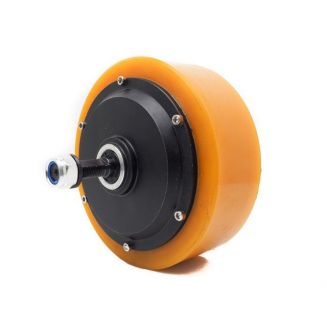
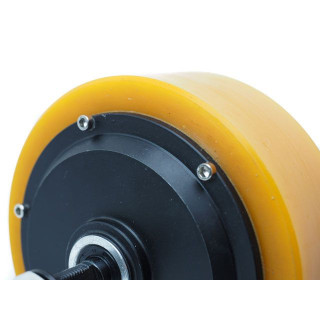
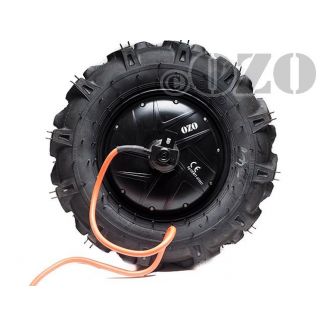
Plus le rendement de votre moteur est élevé et meilleure sera votre autonomie. Nos moteurs ont des rendements situés entre 84% et 86%, cependant certains moteurs électriques du marché ont des rendements inférieurs à 80%.
La courbe d’accélération :
|
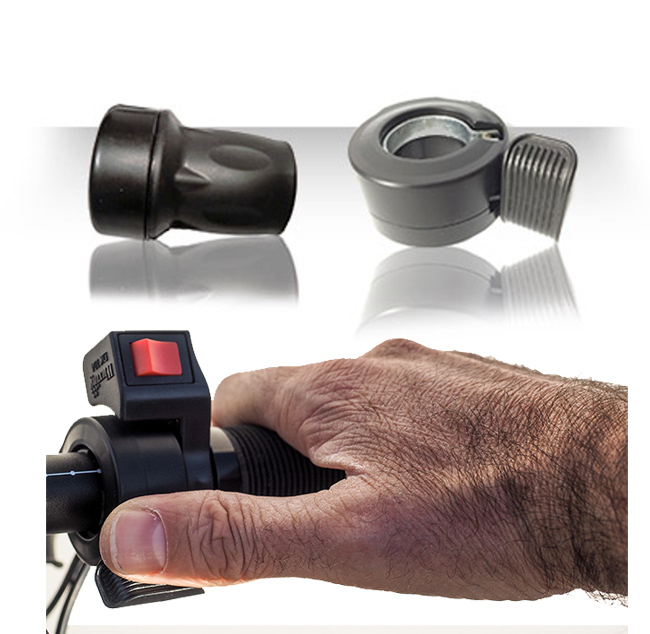
Il s’agit ici de la façon dont vous tournez la poignée d’accélérateur. Comme avec l’accélérateur de votre voiture il ne faut pas accélérer de façon binaire (tout ou rien). Accélérez progressivement et accompagnez votre moteur au démarrage en pédalant.
Pour accélérer, tournez progressivement la poignée pour éviter les pics d’intensité qui diminueront votre autonomie.
|
 |
La capacité réelle de la batterie :
La capacité de la batterie, notée en Ampère Heure (Ah), est la quantité d’énergie dont vous pouvez disposer.
La plupart des batteries pour vélos électriques ont une capacité de 10Ah.
Une batterie de 15Ah vous donnera 50% d’autonomie en plus qu’une batterie de 10Ah (à qualité de cellule égale).
Notez bien que la capacité n’a rien à voir avec la puissance admissible par la batterie. Certaines batteries de 10Ah supportent des courants de décharge de 40A en continu alors que certaines batteries de 20Ah ont du mal à supporter des courants de décharge de 20A.
De plus, la capacité max de votre batterie va dépendre de deux facteurs :
- Qualité des cellules qui la composent.
- Valeur moyenne du courant de décharge.
|
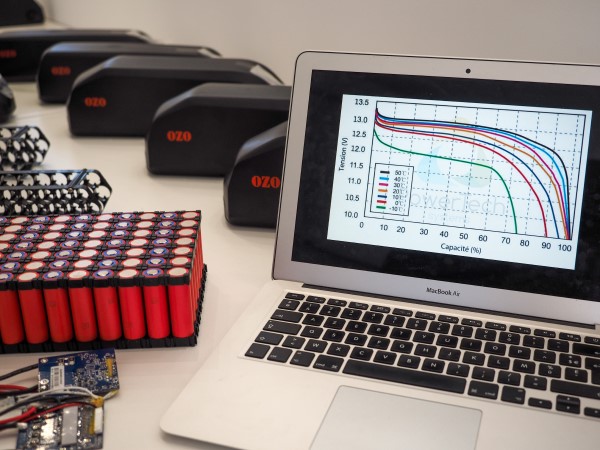
En effet, des cellules d’entrée de gamme vont fournir 10Ah sous un courant de décharge de 5A, puis ne vont fournir que 8,5Ah sous 10A et 7,5Ah sous 15A. Un courant de 15A étant généralement leur limite.
Des cellules de qualité moyenne pourront accepter des courant de 20A à 25A mais elles fourniront les 10Ah en général sous un courant de décharge de 15A et leurs performances diminueront pour atteindre environ 8Ah sous 25A.
Les cellules hautes performances peuvent accepter jusqu’à 50A de courant de décharge et fournissent les 10Ah de capacité sous des courants de 35A sans problème.
Par exemple, les cellules Samsung que nous utilisons dans nos packs délivrent 9,5Ah sous 45A de courant de décharge continu.
|
 |
La température extérieure :
En règle générale, les batteries de traction, toutes technologies confondues, conservent leurs performances pour des températures situées entre 10°C et 35°C.
Aux alentours de 0°C ou en dessous on note une perte d’autonomie de 20% à 30% en fonction des batteries.
Cette perte d’autonomie dans les basses températures est valable pour la charge et la décharge, c’est pourquoi nous vous conseillons de charger votre batterie à l’intérieur entre 10°C et 25°C.
L’âge de votre batterie :
|
Plus la batterie vieillit et moins bonnes sont ses performances.
Ici aussi la qualité des cellules intervient. En effet, certaines batteries Lithium d’entrée de gamme perdront 50% d’autonomie au bout de 12 mois et 70% au bout de 18 mois.
En général, la perte d’autonomie sur une batterie Lithium-Ion est de 20% au bout de 300 cycles (1 an) et de 30% au bout de 700 cycles (2 ans).
Les cellules que nous utilisons dans nos batteries compactes OZO 48V 10Ah perdent 20% de capacité au bout de 1000 cycles (3 ans) et 40% au bout de 1500 cycles (4,5 ans).
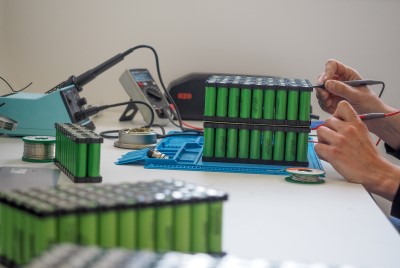
Cependant, il se peut que la perte de capacité sur votre batterie ne soit pas dûe seulement à une usure naturelle des cellules. En effet, si votre BMS n’est pas de bonne qualité, il peut se créer un déséquilibre de performances des cellules constituant votre pack.
Si votre batterie n’est plus sous garantie et qu’elle a moins de deux ans, nous pouvons intervenir dessus en atelier pour « booster » les éléments défaillants et vous permettre de retrouver quelques Ah supplémentaires.
|
 |
L’utilisation que vous faites de votre batterie : (charge, décharge, stockage…)
Pour optimiser la durée de vie de votre batterie, il vous faudra suivre les consignes d’utilisation qui vous seront fournies avec votre batterie Lithium OZO.
Attention aux conseils que l’on peut trouver sur les forums ou chez certains distributeurs qui sont loin de la vérité.
Quelle que soit la technologie de votre batterie, ne la stockez jamais lorsque celle-ci est complètement déchargée.
Méthodes d’estimation de l’autonomie de votre kit électrique pour vélo :
Puissance moyenne consommée :
La consommation énergétique est directement liée à la puissance moyenne nécessaire :
Par exemple si on a une batterie de 36V-10AH, l’énergie embarquée est de 360Wh ; si le moteur utilisé consomme une puissance moyenne de 100W en continu on peut envisager une autonomie de 3,6 heures avec cette installation.
Avec un cycle analyst ou un wattmètre vous connaitrez la puissance consommée en temps réel.
Energie consommée par Kilomètre :
10Wh/km est la valeur moyenne dont vous pouvez vous servir pour simplifier vos calculs d’autonomie. Cette valeur correspond à une utilisation « assistée » sur route bitumée et vallonnée avec un cycliste de 80Kg fournissant un effort « normal » et des pneumatiques gonflés à 3 Bar. Une utilisation « assistée » signifie que le cycliste pédale et ne se sert pas de son vélo comme d’une moto.
Tableau comparatif de la distance moyenne en fonction de la batterie :
|
Batterie |
36V 9Ah |
36V 11Ah |
36V 14Ah |
48V 10Ah |
48V 15Ah |
|
Energie embarquée |
324 |
396 |
504 |
480 |
720 |
|
Distance (pour 10Wh de conso / Km) |
33Km |
40Km |
50Km |
48Km |
72Km |
Ces valeurs ne sont que purement indicatives. Celles-ci peuvent être doublées si vous pédalez souvent ou divisées par deux si vous ne pédalez pas.
Le cycle analyst mesure aussi l’énergie consommée par kilomètre.